








In the digital age, the speed at which a business responds to its customers often dictates its survival. The traditional model of hiring, training, and managing vast teams of support agents is becoming increasingly unsustainable for rapidly growing companies. As consumer expectations for instant, 24/7 gratification rise, the bottleneck of human bandwidth becomes a critical vulnerability. The solution lies in a paradigm shift that is already transforming the industry: deploying AI customer support to handle the heavy lifting of client interaction.
This is not about replacing human connection; it is about elevating it. By integrating sophisticated digital workers that can mimic your brand’s voice and access your entire knowledge base instantly, businesses are unlocking a level of efficiency previously thought impossible. In this guide, we will explore the mechanics of this technology, the rise of the digital workforce, and the strategic advantages that are making AI an indispensable asset for modern enterprises.
The Rise of the Digital Workforce
For decades, “scaling support” meant one thing: outsourcing. Companies would send their customer service tickets to massive call centers, often sacrificing quality and brand voice for lower costs. However, a new era has dawned. We are witnessing the emergence of the digital workforce—a team of AI agents capable of performing complex tasks with the nuance and specific knowledge of a seasoned employee.
Beyond the Basic Chatbot
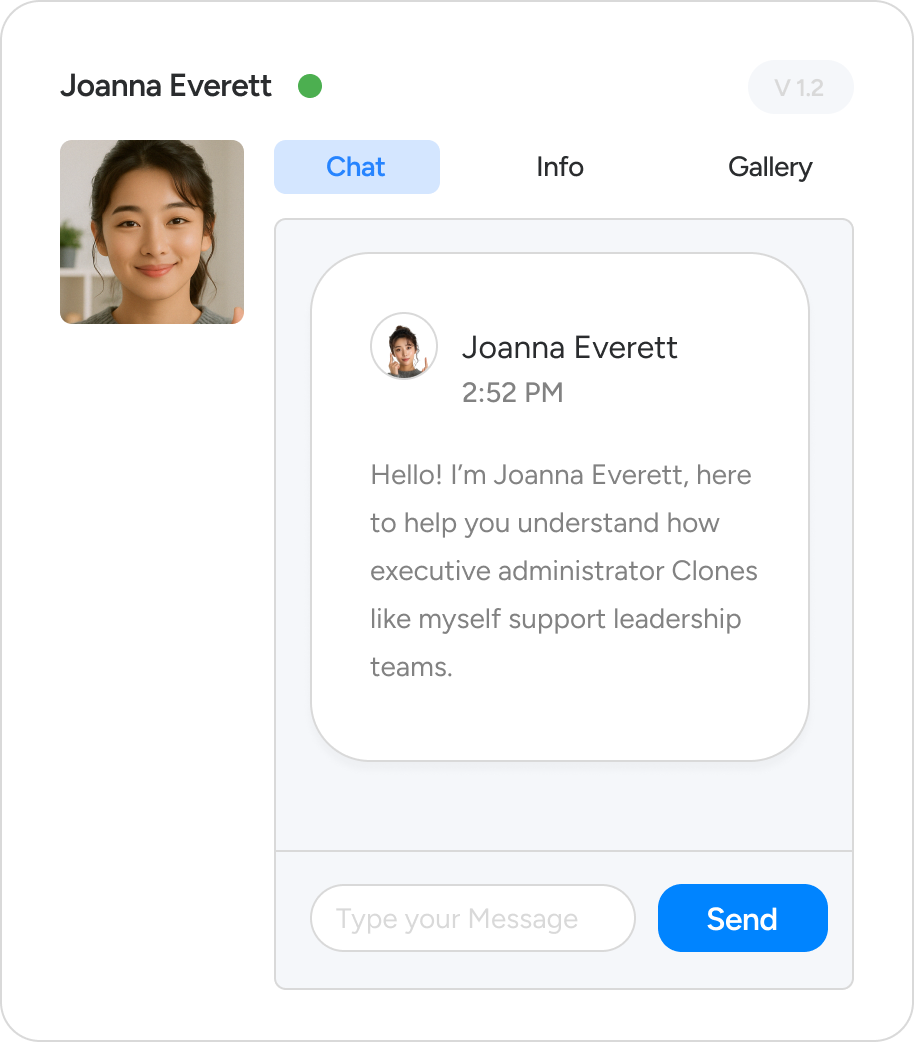
It is crucial to distinguish between the frustrating, rule-based chatbots of the past and today’s digital workers. Early chatbots operated on rigid “if/then” scripts; if a customer phrased a question unexpectedly, the bot failed. The modern digital workforce is built on Large Language Models (LLMs) that understand context, sentiment, and intent. These AI agents do not just regurgitate FAQs; they engage in dynamic conversations. They can be “cloned” to reflect the specific personality of a founder or a top support agent, ensuring that every interaction feels authentic to the brand, rather than robotic and detached.
The Hybrid Model of Employment
The goal of a digital workforce is not to render human employees obsolete but to liberate them. In a hybrid model, AI agents handle 80% of the volume—routine inquiries, order tracking, and basic troubleshooting—instantly and accurately. This filters out the noise, allowing your human team to focus on the top 20% of high-value, complex issues that require genuine empathy and creative problem-solving. This symbiosis creates a more fulfilling work environment for humans and a faster, more efficient experience for customers.
How It Works: The Mechanics of AI Cloning
To the uninitiated, the concept of an AI agent that knows your business inside and out can seem like magic. However, understanding how it works demystifies the technology and highlights why it is so effective for business applications. The process involves more than just plugging in a generic AI; it requires training a specialized model on your specific data.
Knowledge Ingestion and Training
The core of an effective AI support agent is its “brain,” or its context window. To create a digital worker that truly represents your company, the AI must ingest your specific data. This includes:
- Website Content & Documentation: The AI “reads” your entire site, help center articles, and PDF manuals.
- Historical Interactions: By analyzing thousands of past support tickets, the AI learns how your human agents have historically solved problems.
- Brand Voice Guidelines: The AI is tuned to speak in your specific tone—whether that is professional and corporate, or witty and casual. This training process transforms a generic model into a specialized expert on your products and services.
Continuous Learning and Refinement
Unlike a human employee who might forget a new policy or struggle to recall a specific technical detail, an AI agent has perfect recall. However, the system is designed to be dynamic. As it interacts with customers, it gathers feedback. If an AI agent encounters a query it cannot answer with high confidence, it can gracefully hand off the conversation to a human. The human’s resolution is then fed back into the system, effectively “teaching” the AI how to handle that specific scenario next time. This feedback loop ensures that the digital worker becomes smarter and more autonomous with every interaction.
A digital workforce operates tirelessly behind the scenes, ensuring that global customer support is seamless and instantaneous.
The Strategic Advantages of AI Adoption
Implementing an AI-driven support system is not merely a cost-cutting measure; it is a strategic growth accelerator. The advantages of moving toward a digital-first support strategy are measurable across key performance indicators (KPIs) like Customer Satisfaction (CSAT) and Response Time.
Infinite Scalability and Availability
The most obvious advantage is time. Human agents sleep; AI does not. A digital worker is available 24/7/365, ensuring that a customer in Tokyo gets the same level of service at 3 AM as a customer in New York does at noon. Furthermore, AI solves the problem of “burst” traffic. If you launch a new product and support volume spikes by 1000% overnight, a human team would be overwhelmed, leading to long wait times and angry customers. A digital workforce scales instantly to meet demand, handling one conversation or ten thousand simultaneous conversations with zero lag.
Consistency and Brand Integrity
Humans have bad days. They get tired, they get frustrated, and their tone can slip. An AI agent maintains perfect consistency. It never loses patience with a rude customer, never forgets to mention an upsell opportunity, and always adheres to compliance and brand guidelines. This consistency builds trust. Customers know that when they engage with your support chat, they will receive an accurate, helpful, and polite response every single time. This reliability is the bedrock of brand loyalty in a competitive market.
Implementing Your AI Strategy
Transitioning to an automated support model is a journey. It requires a thoughtful approach to ensure that the technology enhances, rather than disrupts, the customer experience.
Start with High-Volume, Low-Complexity Tasks
Do not attempt to automate everything on day one. Begin by analyzing your support tickets to identify the “low-hanging fruit.” These are the questions that your human team answers dozens of times a day—password resets, shipping inquiries, pricing questions. By deploying AI to handle these specific categories first, you can see immediate ROI and free up your human agents’ time.
Monitoring and Optimization
Once deployed, the AI requires oversight. Treat your digital worker like a new hire. Review its conversation logs regularly to ensure it is representing your brand correctly. Look for patterns in the questions it fails to answer—this is a signal that you need to update your knowledge base or create new content. The most successful companies view their AI support not as “set it and forget it” software, but as an evolving member of the team that requires coaching and development.
Conclusion
The era of waiting on hold is over. The businesses that will dominate the next decade are those that recognize time as their customers’ most valuable resource. By adopting AI customer support, you are not just upgrading your technology stack; you are upgrading your relationship with your customers.
A robust digital workforce offers the unparalleled ability to scale your operations without scaling your overhead. It ensures that every question is answered, every lead is nurtured, and every customer feels heard—instantly.
Keep an eye for more latest news & updates on Greek Buzz!